Bay Area Microgrid and Community Solar Growth 2026
Neutral, data-driven update on the development of Bay Area microgrid deployment and the growth of community solar projects by 2026.
The Bay Area is witnessing a decisive shift in how communities generate, share, and manage clean energy, with 2026 marking a clear inflection point for microgrid deployment and community solar growth across the region. In Oakland, a landmark rooftop solar project completed under California’s DAC-GT and Community Solar programs is already delivering tangible bill savings to eligible households, while Richmond’s Advanced Energy Community project demonstrates how a distributed energy resources (DER) portfolio can function as a scalable virtual power plant. Statewide, regulators are recalibrating community solar programs to expand access, equity, and resilience, setting a pace that could redefine resilience planning and local energy ownership in city neighborhoods throughout the Bay Area. These developments collectively illustrate how policy design, utility collaboration, and community-led deployment are converging in 2026 to support both reliability and affordability for Bay Area residents and local businesses. In short, the Bay Area microgrid deployment and community solar growth 2026 storyline is not only about technology; it’s about practical, on-the-ground changes that impact daily life and regional energy security.
The momentum in 2026 is anchored by a series of regulatory and programmatic milestones that expand the scale and accessibility of community solar, while advancing microgrid concepts in both urban and semi-rural settings. Regulators in California have been refining and expanding community solar as a tool for equity and resilience, delivering both direct bill savings for participants and broader grid benefits. A milestone both symbolic and practical occurred when the CPUC facilitated the deployment of a new wave of community solar projects under the CRE Program and related DAC-GT and CSGT initiatives. The CPUC’s ongoing updates highlight that California now hosts a large and growing portfolio of community solar projects, with a substantial pipeline under construction, underscoring the Bay Area’s role in a broader statewide movement toward community-scale solar and distributed energy resources. As one CPUC official noted during a related event, these initiatives show how competitive community solar can expand access to clean energy while delivering measurable savings and local economic opportunities. The CPUC’s recent reporting also emphasizes how the combination of CARE/FERA subsidies, 20 percent discount programs for income-qualified customers, and ongoing program refinements are driving tangible bill reductions and energy equity across households in California. These developments matter in the Bay Area because local electricity costs, resilience needs, and community priorities intersect with state policy to shape where and how microgrids and community solar projects are deployed.
Opening the door to rapid, on-the-ground progress, Oakland’s Prologis rooftop solar project — part of Ava Community Energy’s program under the DAC-GT framework — stands as an early, high-visibility indicator of what’s possible when city-led resilience goals meet private-sector rooftop capacity. The project, a 0.72-megawatt rooftop installation completed and operational as of June 2026, is paired with other nearby initiatives to broaden access to solar for renters and multifamily housing, and to balance equity with cost savings on utility bills. The Oakland project is not a standalone case; it sits within a broader statewide arc of community solar projects, including urban infill deployments and multi-site portfolios. The CPUC notes that California now has more than 1,200 shared solar projects totaling roughly 560 MW in operation, with hundreds more under construction, illustrating the scale of the program and the Bay Area’s share within it. These numbers and the Oakland milestone help readers understand both the momentum and the practical realities of scaling community solar in dense urban settings. This broader context matters because the Bay Area’s energy landscape combines high electricity costs, wildfire and outage risk, and a strong policy emphasis on equity and resilience. The growth of community solar offerings, including projects hosted on industrial rooftops and warehouse spaces, is central to meeting those regional goals.
Finally, California’s push toward advanced energy communities and virtual power plants is not limited to a single project or region. The Richmond Advanced Energy Community project in Northern California demonstrates how a community-led DER deployment can function as a scalable virtual power plant (VPP) orchestrated by a community choice aggregation (MCE) and its partners. The project, updated in May 2026, shows how an orchestrated DER portfolio across rehabilitated affordable housing can deliver demand response services, improve grid reliability, and provide a pathway toward broader VPP rollout within Bay Area utilities’ service territories. Meanwhile, the Redwood Coast Airport Microgrid project provides a concrete, front-of-the-meter, multi-customer example of a solar-plus-storage system with islanding capability, tariff development, and regulatory progress that can help replicate similar models in Bay Area contexts. Taken together, these developments signal that 2026 is a turning point for Bay Area microgrid deployment and community solar growth, with policy design, regulatory certainty, and real-world deployments driving a more resilient, affordable regional energy system.
What Happened
Regulatory milestones shaping community solar and microgrids
California regulators have been actively refining and expanding community solar programs, with a focus on equity, resilience, and broader customer participation. In 2026, the CPUC highlighted the expansion and refinement of the CRE Program, the continuation of the DAC-GT and CSGT programs, and a pipeline of new rooftop solar arrays across urban and industrial settings. The CPUC’s April 23, 2026 update notes that California already hosts about 1,200 community solar projects totaling around 560 MW in operation, and another 430 projects totaling about 165 MW under construction. This scale underscores the rapid growth of community solar and sets the stage for Bay Area deployments to accelerate in the coming months. The emphasis on equity is clear: DAC-GT and CSGT offer 20 percent bill discounts to income-qualified customers, with potential bill reductions up to 50 percent when combined with CARE and FERA programs. The CPUC also pointed to a broader strategy to roll out the CRE Program in the near term, signaling a regulatory pathway to broaden access for both residential and commercial customers. These regulatory developments are the backbone that make Bay Area microgrid deployments more feasible and financially attractive for local communities and developers. Sources: CPUC coverage on CRE program updates, DAC-GT/CSGT, and statewide community solar metrics. (cpuc.ca.gov)
Oakland and Carson projects illustrate utility partner models
Ava Community Energy’s Oakland portfolio, highlighted during an in-person event in Oakland on June 5, 2026, demonstrates the practical execution of California’s community solar approach in an urban setting. The Oakland project, a 0.72 MW rooftop solar installation hosted on a Prologis site, is part of a broader strategy to increase access to solar for households that cannot install rooftop systems themselves. The project is one element of a statewide push that includes additional rooftop solar arrays and a portfolio that, when scaled, can deliver meaningful bill reductions to participating households. The Carson project, a 1.32 MW rooftop solar installation also under the DAC-GT/CSGT framework, illustrates how urban infill on industrial rooftops can be leveraged to deliver clean energy and savings within an urban environment. Together, these projects underscore a practical model: rooftop or near-urban solar facilities integrated with copper-top resilience and targeted discount programs, supported by a robust regulatory framework, can deliver both resilience and affordability in the Bay Area. The California CPUC’s coverage confirms these specific projects and their roles in California’s broader community solar strategy. (cpuc.ca.gov)
Richmond Advanced Energy Community Project demonstrates VPP and DR
In Northern California, the Richmond Advanced Energy Community Project illustrates how community-led DERs can be orchestrated as a virtual power plant to provide demand response and grid services, with a focus on rehabilitated affordable housing within a disadvantaged community. The project, updated in May 2026, shows how open-source code stacks, turnkey DER program management, and pay-for-performance compensation can support a scalable VPP approach. The project’s findings emphasize that community choice aggregations can function as DR providers and can optimize VPP value through enterprise DER management systems, enabling a distributed energy resource program that benefits residents and the broader grid. This example demonstrates a concrete path for Bay Area neighborhoods seeking resilience through local DER orchestration and community-driven energy strategy. (energy.ca.gov)
Redwood Coast Airport Microgrid as a scalable community microgrid model
The Redwood Coast Airport Microgrid project, published in January 2026 by the California Energy Commission (CEC), represents a front-of-the-meter, multi-customer community microgrid in PG&E’s service territory. The system comprises a 2.2 MW DC solar array feeding a 8.87 MWh lithium-ion storage system, plus a 2.3 MW AC solar array behind the meter and four 20 kW DC behind-the-meter EV chargers. The project serves 19 retail customers at the end of a distribution circuit, including the nearby airport and a Coast Guard air station, and it has demonstrated seamless islanding with reliable performance through multiple extreme events, including earthquakes and winter storms. The project also advanced regulatory pathways by developing a community microgrid tariff and operating agreement, which informed broader policy work and helped lay groundwork for future replication. The Redwood Coast Microgrid’s experience underscores technical feasibility, regulatory progress, and the importance of a clearly defined tariff and operating framework for multifaceted, community-scale microgrids. (energy.ca.gov)
Broader California momentum and Bay Area resonance
As part of statewide momentum, California’s ongoing updates to community solar policy and program design are creating a more predictable environment for Bay Area microgrid and community solar deployments. The CPUC’s community solar initiatives emphasize equity (with discounts for income-qualified households) and the economic development potential of local solar installations, while the CEC has shown a path for scalable DER deployments and microgrids through EPIC-funded projects like Richmond and Redwood Coast. The combination of policy clarity, measurable project outcomes, and a track record of real-world deployment in nearby Bay Area contexts signals a favorable environment for continued Bay Area microgrid deployment and community solar growth in 2026 and beyond. These policy and program developments, paired with concrete, on-the-ground projects, provide readers with a clear sense of the direction and pace of change in the Bay Area’s energy landscape. (cpuc.ca.gov)
Why It Matters
Resilience and bill savings for Bay Area residents
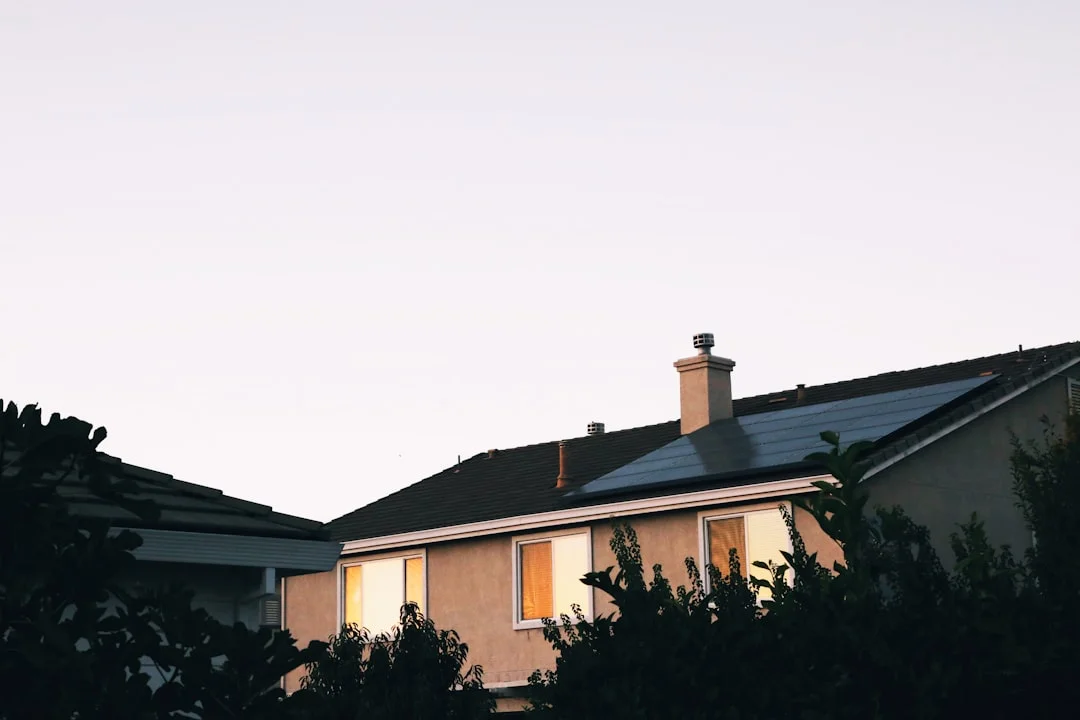
Photo by Giorgio Trovato on Unsplash
Community solar and microgrid projects deliver tangible resilience and bill-saving benefits for Bay Area residents, including renters and multifamily households that may not have access to rooftop solar. The CPUC’s DAC-GT and CRE Program designs are designed to translate resilience into lower electricity bills for income-qualified households, with potential reductions of up to 50 percent when combined with CARE and FERA, as part of a broader set of energy-assistance programs. The practical impact is most visible in projects like Ava Community Energy’s Oakland deployment, where a 0.72 MW rooftop system is deployed in an urban environment to unlock off-site solar benefits for nearby residents. The broader portfolio of 1,200+ community solar projects statewide, including 125,000 residential and 60,000 commercial subscribers, demonstrates the scale of potential savings and resilience that Bay Area communities can access as new projects come online. The Bay Area thus benefits from both direct savings and enhanced resilience during outages or extreme weather, a critical consideration in a region prone to wildfire season and grid stress. (cpuc.ca.gov)
Market development, equity, and local opportunity
The Richmond Advanced Energy Community Project shows the economic and workforce benefits that can accompany DER deployments within Bay Area neighborhoods. By using a VPP approach, the project demonstrates how community-scale resources can be orchestrated to provide grid services and local energy affordability, while also supporting job training and workforce development. This aligns with the broader CPUC and California policy emphasis on equity and local economic development tied to clean energy deployment. The lessons from Richmond — including the use of open-source software, turnkey program management, and pay-for-performance compensation — offer a replicable blueprint for other Bay Area communities seeking to maximize the value of distributed energy resources while delivering tangible benefits to residents. (energy.ca.gov)
Technical feasibility and regulatory clarity
California’s 2026 microgrid and community solar milestones emphasize both technical feasibility and regulatory clarity. The Redwood Coast Airport Microgrid, as a case study, demonstrates that a multi-customer microgrid can operate reliably and that regulatory pathways, tariffs, and operating agreements can be crafted to support replication in other contexts. This is particularly relevant for Bay Area projects that require careful tariff design and regulatory buy-in to enable multi-customer microgrids and city-scale resilience programs. The regulatory groundwork, demonstrated by CRE, DAC-GT, CSGT, and related policy updates, provides a framework within which Bay Area developers and municipalities can plan and finance microgrid-plus-solar deployments that deliver resilience, affordability, and environmental benefits. (energy.ca.gov)
Local governance and community impact
Bay Area deployments are also shaped by local government interest in energy resilience and climate planning. City and county-level resilience programs, including those highlighted by SF’s resilience planning and Port of San Francisco open houses for waterfront resilience, reflect a broader municipal interest in resilience and energy transition that can be allied with microgrid and community solar initiatives. While many Bay Area-specific programs are coordinated through state regulators, the alignment between city-level resilience agendas and state solar/DER policy signals an opportunity for more tightly integrated, community-led energy projects in 2026 and beyond. Regulatory updates, industry programs, and city-level resilience initiatives collectively shape the Bay Area’s energy policy trajectory and project opportunities. (sf.gov)
Workforce development and local capacity
In addition to direct bill savings and resilience benefits, these programs emphasize local workforce development and capacity-building. The Ava Community Energy project, along with Richmond’s VPP work and the broader CRE program design, highlights opportunities for local training, apprenticeship-like programs, and job creation in solar installation, DER management, and grid services. The CPUC’s emphasis on equity and the Environmental and Social Justice focus in program design indicate that Bay Area deployments could help broaden access to good-wage jobs in the clean energy economy, building a more inclusive energy transition for residents in disadvantaged communities. (cpuc.ca.gov)
What's Next
Near-term Bay Area projects and policy developments
Looking ahead, Bay Area stakeholders should watch for continued expansion of community solar projects under CRE and DAC-GT/CSGT programs as the CRE framework is implemented and expanded. The CPUC’s ongoing updates suggest a growing pipeline of rooftop and urban-infill solar deployments across Southern and Northern California, including Bay Area counties. The Oakland and Carson projects already demonstrate urban solar infill as a viable pathway; additional projects in the Bay Area are expected to emerge as developers, utilities, and local governments align on financing, permitting, and interconnection processes. As policy evolves, Bay Area communities could see more targeted energy-burden relief through programmatic discounts and expanded access for renters, multifamily housing residents, and non-profit organizations. The CPUC’s broad state-wide momentum indicates that similar Bay Area deployments are likely to accelerate in 2026 and into 2027. (cpuc.ca.gov)
Regulatory horizon and potential new programs
In 2026, California’s CRE program is expected to be implemented more fully, with continued refinement of DAC-GT and CSGT offerings and potential expansions to include more diverse project types and host-sites. The CPUC’s ongoing decisions, combined with state funding opportunities, could unlock broader participation by local governments, cooperatives, and community groups in Bay Area microgrid and community solar deployments. For readers, this means more opportunities to subscribe to community solar or participate in local DER projects that offer resilience and bill savings. The regulatory pathway is crucial here: it determines project eligibility, subscription structures, and how the savings flow back to participants. (cpuc.ca.gov)
What to watch for in 2027 and beyond
Key indicators to watch in 2027 include:
- The scale of new Bay Area rooftop solar deployments within urban infill projects and industrial rooftops, consistent with DAC-GT/CSGT program activity and CRE program roll-out.
- The expansion of DER orchestration and VPP-type deployments in the Bay Area, particularly in neighborhoods with higher energy burdens, aligned with Richmond’s model and the broader California policy framework.
- Regulatory updates that establish clearer tariffs, revenue streams, and workforce development pathways for microgrid and community solar projects in the Bay Area, enabling more robust project pipelines.
- The emergence of community solar projects connected to the Bay Area’s commercial corridors and affordable housing stock, providing reliable energy and reducing monthly bills for residents.
Potential challenges and considerations
While the 2026 momentum is notable, Bay Area deployments will continue to face challenges, including:
- Financing and economics: ensuring that microgrid-plus-solar projects deliver verifiable resilience and savings that justify capital costs and ongoing operations and maintenance.
- Interconnection and permitting: streamlining processes to bring projects online quickly while maintaining safety and reliability.
- Community engagement and equity: ensuring that low-income households and disadvantaged communities are meaningfully included in project design, access, and benefits.
- Replicability: ensuring that lessons from Richmond and Redwood Coast can be translated into scalable models that fit the Bay Area’s unique urban contexts and regulatory environment.
The Bay Area’s path forward will depend on continued collaboration among regulators, utilities, local governments, developers, and community organizations. The 2026 milestones provide a foundation, but ongoing successes will hinge on how well these parties execute on policy, financing, permitting, and community engagement in the months and years ahead. (cpuc.ca.gov)
What's Next (Continued)
Timeline expectations and milestones to watch

Photo by Josh Felise on Unsplash
- Mid-2026 to late-2026: Rolling out CRE Program implementations and expanding DAC-GT/CSGT projects statewide, with Bay Area pilots and infill projects advancing to full operation.
- 2026–2027: Expansion of Richmond-style VPP deployments into additional Bay Area neighborhoods, supported by DER management platforms and workforce development initiatives.
- 2027 onward: Additional microgrid tariffs and regulatory frameworks that enable more robust replication across the Bay Area, including more urban and peri-urban microgrid deployments that pair solar with storage and demand response services.
What to watch for in Bay Area resilience and energy access
- Increased rooftop solar deployments on commercial and industrial rooftops in the Bay Area to support resilience during outages and demand surges.
- More community solar projects in neighborhoods with high energy burdens, delivering meaningful bill savings and enabling participation by renters and multifamily housing residents.
- Regulatory updates that simplify project financing and interconnection while protecting ratepayers and ensuring equitable access.
Closing
The Bay Area’s 2026 energy story is defined by tangible deployments that unite solar generation, storage, and grid services with policy design aimed at resilience and equity. From Oakland’s 0.72 MW rooftop installation to Richmond’s community-led VPP approach and the regulatory momentum behind CRE and DAC-GT programs, the region is building a more resilient, affordable energy future grounded in real-world outcomes. As regulators and local stakeholders continue to refine programs and scale deployments, Bay Area residents will be watching closely for the next wave of projects that bring down bills, strengthen reliability, and empower communities to actively participate in California’s clean energy transition. The coming months will reveal how these developments translate into broader access to clean energy, more local construction jobs, and a more prosperous, resilient Bay Area energy economy.